At a glance

What
Perlite is a natural volcanic glass that is heated to around 850–1200 °C and expands to roughly ten times its volume.
Used for
as an additive in potting soil (usually 10–30%), for propagation and cuttings, in cactus mix and in hydroponics.
Why
more air at the roots, less waterlogging, water held in pores and gaps between grains.
Properties
pH-neutral, nutrient-free, sterile from the factory, does not rot, very light.
With us
Advice on grain size and quantity, price and terms with your personal quote.

What is perlite?

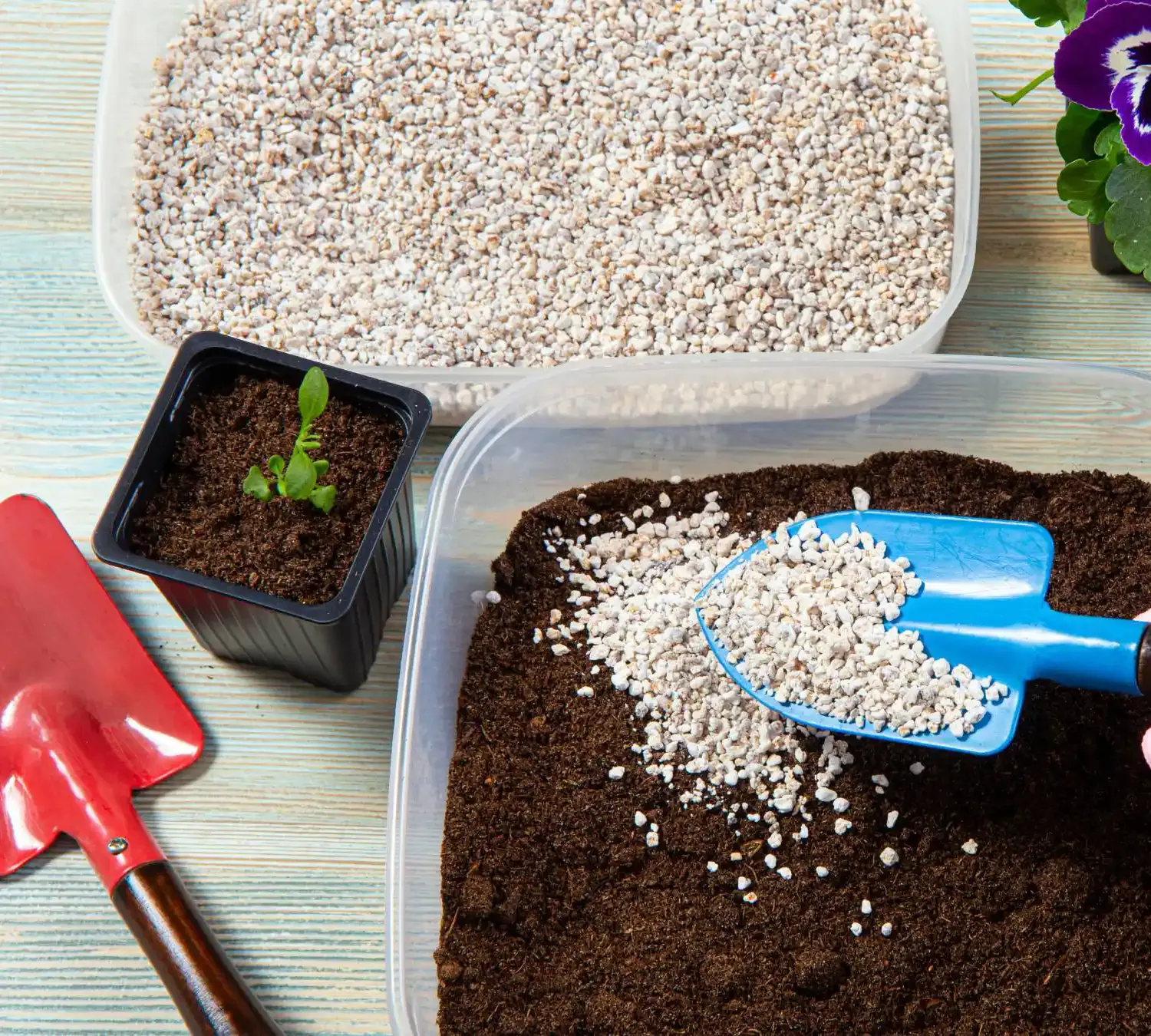
Perlite (in German also spelled “Perlit”) is a volcanic rock: a glassy, rhyolitic lava rock formed when lava cools quickly, containing 3–5% bound water. When the crushed raw rock is heated suddenly to 850–1200 °C, this water turns to steam and puffs up each grain – much like popcorn. The result is a white, porous and extremely light granulate with a pore volume of around 97%.

In plant growing, perlite is a real all-rounder: as an additive that keeps soil loose for good, or as a pure medium for cuttings and hydroponics. Because perlite is chemically almost inert, it changes neither the pH nor the nutrient supply of your soil – it only improves the structure.

More in the guide: What is perlite?
Product variants

Which grain size you need depends on the use: fine grades hold more water, coarse grades provide more air.

Product variants
Grain sizeTypical use
fine, approx. 0–3 mmsowing, seed-starting compost, fine mixes, lawns and sandy soils
medium, approx. 2–6 mmall-round: houseplants and balcony plants, cuttings, raised beds, planters
coarse, approx. 4–8 mmcoarse mixes with bark (e.g. aroids, orchids), cacti, drainage
  • We will gladly tell you which grain sizes and bag sizes we currently stock with your quote.
  • 100 litres of dry perlite weigh only about 10–13 kg (typical bulk density 96–128 kg/m³).
  • Larger quantities on request.
  • You receive prices with your personal quote.

Your benefits

  • Loosens soil and aerates the roots

    The hard, porous grains stop soil from compacting. Air stays in the root zone, excess water drains better and the risk of waterlogging and root rot falls.

  • Holds water – without waterlogging

    Perlite holds water on its rugged surface and in the gaps between grains, releases it to the roots and lets air through at the same time. That gives more even moisture.

  • Sterile, neutral and nutrient-free

    Perlite is sterile from the factory thanks to the heat. It is pH-neutral and brings no nutrients – you keep full control over feeding and pH. Ideal for propagation.

  • Light and long-lasting

    Perlite is very light: 100 litres weigh only about 10–13 kg when dry. Pots, balcony boxes and roof gardens become noticeably lighter. And because perlite does not rot, the structure of your soil lasts for years.

  • For professionals and hobby gardeners

    Whether repotting on the balcony, propagating on the windowsill or growing hydroponically in the greenhouse: perlite is versatile and easy to handle.

Uses and mixing ratios

Guide values in percent by volume of perlite in the finished mix. Details and tables in the guide How to mix perlite.

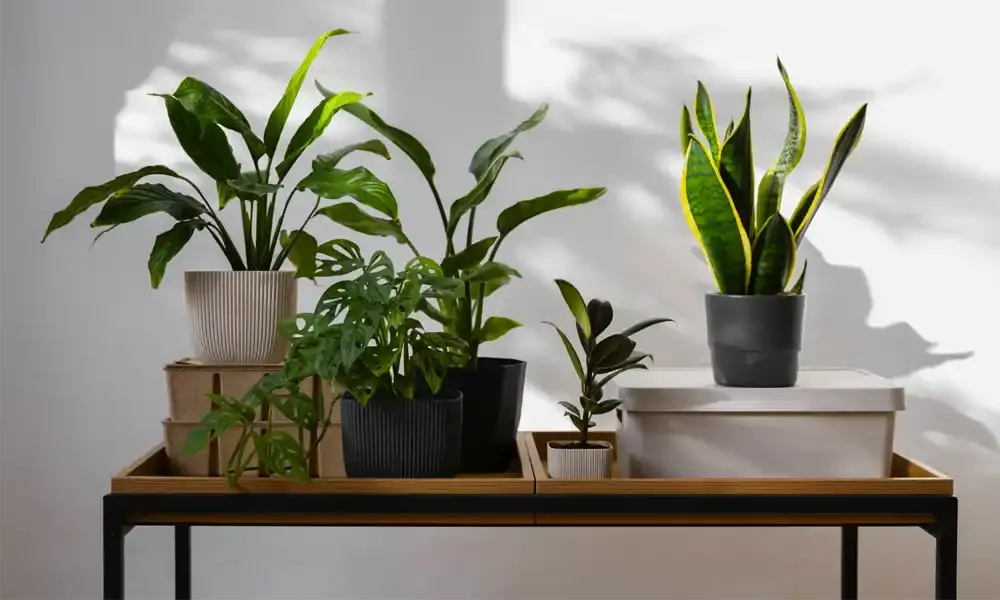
  1. Various potted houseplants on a wooden table in front of a bright wall

    10–30%

    Houseplants

    Mix 10–30% perlite into good-quality potting soil, as a rule of thumb about 20% (1 part perlite to 4 parts soil). For plants that like it airy – such as monstera, philodendron or hoya – go towards the upper end.

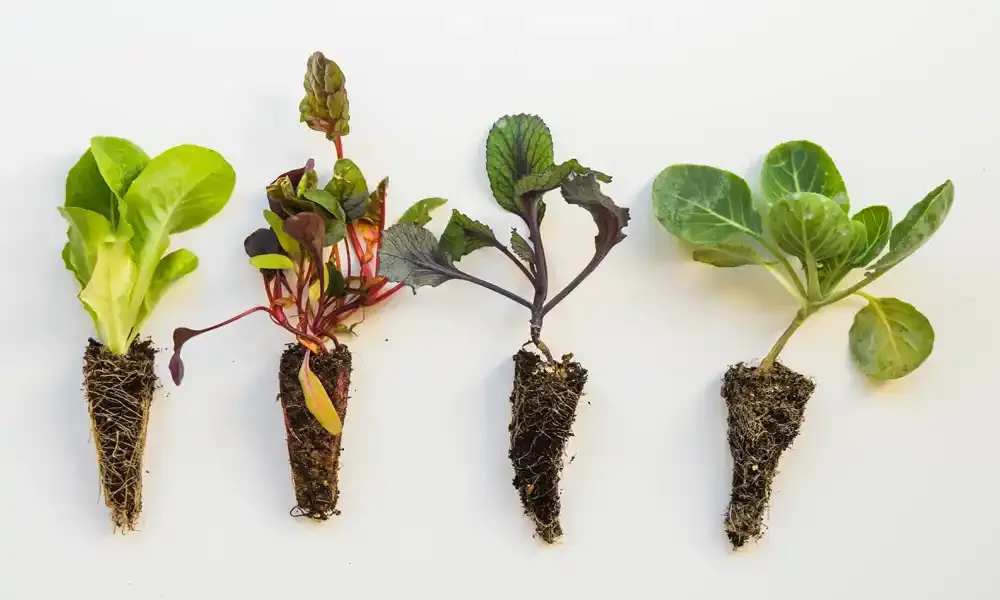
  2. Four young plants with strong, exposed root balls

    20–30%

    Propagation and young plants

    Seed-starting compost with 20–30% fine perlite, up to 30% for seed trays. For sowings, 1:1 mixes with seed-starting compost are also common. The loose medium makes it easier for fine roots to grow through.

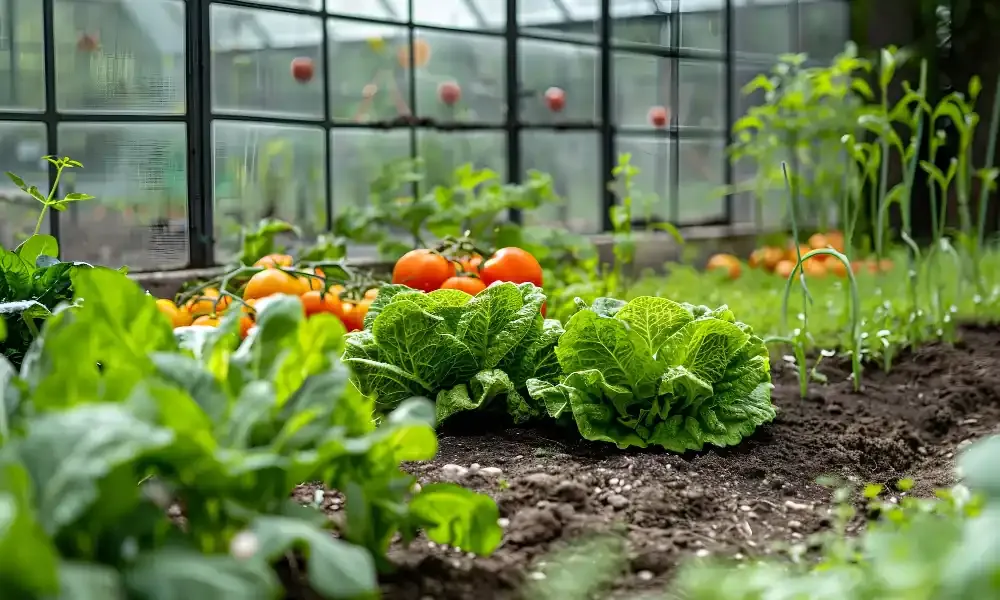
  3. Vegetable bed with lettuce and ripe tomatoes in a greenhouse

    approx. 20%

    Vegetable and herb beds, raised beds

    In a raised bed or planters, mix about 20% perlite into the top layer. For Mediterranean herbs that like dry feet, use a little more.

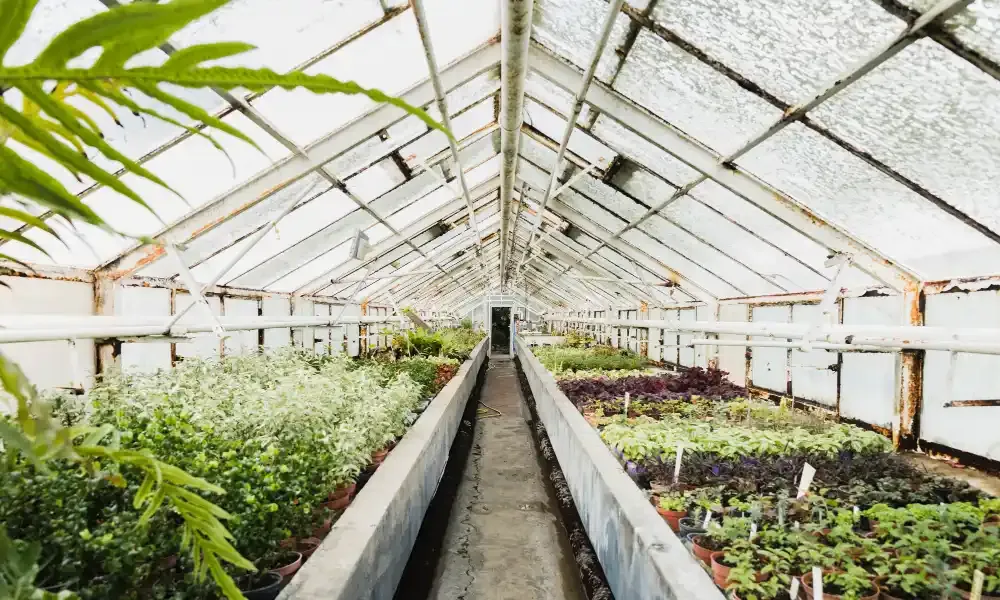
  4. View along a long greenhouse with planted tables

    pure or 20–30%

    Hydroponics and greenhouse

    Perlite can be used pure as a medium, or mixed at 20–30% into another medium (e.g. coco) in ebb-and-flow systems.

  • pure or 1:1

    Cuttings

    Cuttings root in pure perlite or in a 1:1 mix of perlite and seed-starting compost (or coco). More in the guide Cuttings, propagation and hydroponics.

  • 30–50%

    Cacti and succulents

    30–50% mineral content so the mix dries out quickly. Perlite combines well with pumice, lava rock or gravel.

  • 5–10 L/m²

    Loosening soil and lawns

    Heavy, clayey garden soils: work in about 10 litres per m². When renovating a lawn, rake in 5–10 litres per m² after scarifying.

Technical data (typical values)

Typical values for expanded horticultural perlite from manufacturer data and technical literature. They are not guaranteed specifications of our product.

Technical data (typical values)
PropertyTypical value
Materialexpanded volcanic glass (rhyolite), amorphous
Main components (raw rock, before expansion)approx. 70–76% silicon dioxide (SiO₂), 11–18% aluminium oxide (Al₂O₃), 4–6% potassium oxide
Expansion temperatureapprox. 850–1200 °C
Volume increase on expansionabout 10-fold, up to 20-fold depending on the raw material
Bulk density (horticultural grade)approx. 96–128 kg/m³ (100 L ≈ 10–13 kg)
Total pore volumeapprox. 97% by volume
Water-holding capacityapprox. 19% (very coarse) to 52% (fine) of volume
pHneutral, approx. 6.5–8.0
Nutrientspractically none (N, P₂O₅, K₂O each < 4 mg/l)
Cation exchange capacityvery low (approx. 1.5 meq/100 g)
Salt contentvery low (EC approx. 4 mS/m)
Hygienesterile from the factory thanks to the heat treatment
Durabilitydoes not rot, keeps its shape, stays effective for years
Classification (CLP)not classified as a hazardous substance

Typical values for expanded perlite taken from manufacturer data and technical literature; not guaranteed product specifications.

Handling, storage and safety

Low-dust handling

Perlite is not classified as a hazardous substance. Like any fine mineral material, however, its dust can irritate the eyes and airways. This keeps handling low in dust:

  • Dampen perlite with a little water before opening or in the bag (a few litres for a large bag).
  • Work outdoors or with good ventilation and pour from a low height.
  • For larger quantities or in enclosed spaces, wear a dust mask (particle filter P2 / FFP2) and, if needed, safety goggles.
  • Keep away from children; do not eat.

Storage

Dry or wet, warm or cold – perlite does not spoil. Close opened bags so that no dirt, seeds or pests get in: perlite is only sterile from the factory.

Reuse and disposal

Used perlite can be reused: remove root remnants, rinse thoroughly in a sieve and let it dry; after diseased or infested plants, pour boiling water over it. Small amounts can simply be worked into garden soil or compost. Dispose of larger amounts according to your municipality’s rules.

Sustainability – an honest look

Natural raw material
Perlite is a natural rock. Around 4.6 million tonnes were mined worldwide in 2025, mainly in China, Turkey, Greece and the USA.
But not renewable
Perlite is open-cast mined. The deposits are large, but they do not grow back.
Energy for expansion
Expanding it at over 850 °C takes energy. Industry figures for insulation perlite put it at around 0.5 kg CO₂ equivalents per kilogram of expanded perlite (about 60 kg per cubic metre). Transport from the countries where it is mined comes on top.
Long service life
Perlite does not rot and can be used many times over many years.
Helps you go peat-free
Peat is an issue in Switzerland – extraction has been banned since 1987, and the federal government wants to reduce peat consumption. Perlite is a common component of peat-free and peat-reduced soils because it provides the structure that peat otherwise supplies.
Organic farming
According to the FiBL inputs list 2026 (Swiss edition), perlite is allowed as a mineral component in substrates, provided it has not been treated after extraction. Our perlite is not a certified organic product.

Frequently asked questions about perlite

How much perlite should go into potting soil?

For most houseplants and balcony plants 10–30% perlite is enough, as a rule of thumb 1 part perlite to 4 parts soil (20%). Cacti and succulents tolerate 30–50% mineral content, and cuttings will even root in pure perlite.

Which grain size should I choose?

For sowing and fine seed-starting compost, fine perlite (approx. 0–3 mm) is suitable; for most uses, medium (approx. 2–6 mm); and for coarse, airy mixes, coarse (approx. 4–8 mm). If in doubt, medium is the most versatile choice.

Is perlite toxic?

According to safety data sheets, perlite is not classified as a hazardous substance. The fine dust can irritate the eyes and airways – so moisten perlite before use and wear a dust mask for larger quantities. Perlite is not intended to be eaten.

Does perlite contain nutrients?

No. Perlite is practically nutrient-free and chemically almost inert. It only improves the structure of the soil; feed as usual.

Does perlite change the pH?

No. Perlite is pH-neutral (typically 6.5–8.0) and hardly buffers at all. The pH of your mix is determined by the soil.

What is the difference between perlite and vermiculite?

Perlite mainly provides air and drainage, while vermiculite stores considerably more water and nutrients. For airy soil and against waterlogging perlite is the better choice; for evenly moist sowings vermiculite can make sense. More in the comparison of perlite, vermiculite and clay pebbles.

Can perlite be reused?

Yes. Perlite does not rot: remove root remnants, rinse thoroughly and let it dry. After diseased plants, pour boiling water over it first.

Why does perlite float to the top when I water?

Perlite is very light and can float up when the grains are dry or when watering heavily. Remedy: dampen perlite before mixing, mix it well into the soil and cover the top layer with soil.

Is perlite from the DIY store the same thing?

Not always. Perlite for plants is untreated. Some construction perlite for insulation fill is bitumen-coated or treated to repel water and is not meant for plants. Look for the label “horticulture” or “for plants”.

Ready for loose, healthy soil?

Tell us what you need perlite for and how much – you will receive a no-obligation quote.