
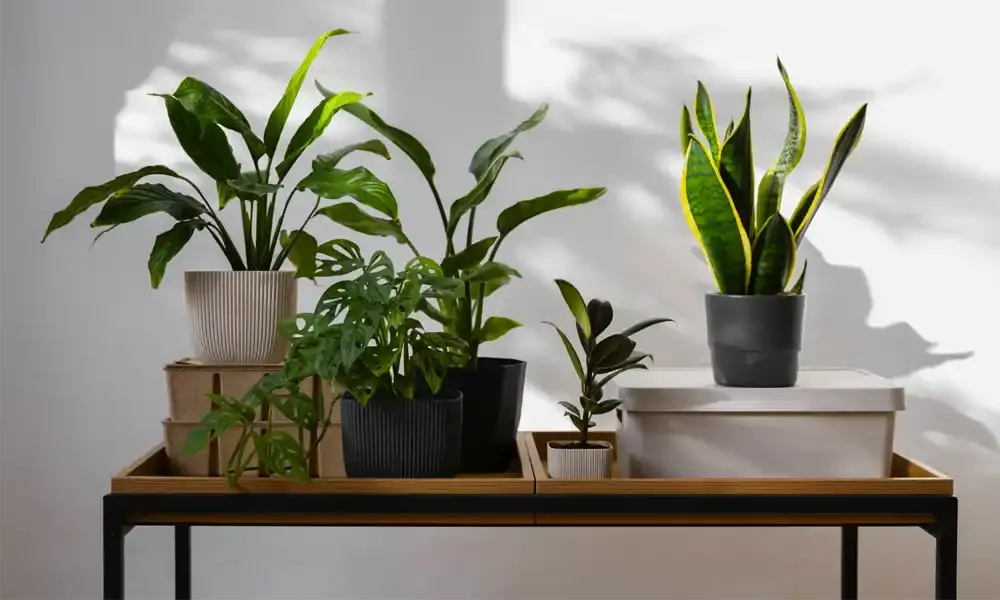
In short: For most potted plants, 10–30% perlite in the soil is enough; as a rule of thumb, 1 part perlite to 4 parts soil. Seed compost can take 20–30%, cacti need a 30–50% mineral share, and cuttings will even root in pure perlite. Always mix by volume, not by weight.
Why the mixing ratio matters
Perlite improves the structure of the soil: it creates large pores that let water drain away and air flow in. Too little perlite has hardly any effect; too much makes the growing medium dry out quickly and leaves it low in nutrients. The right ratio depends on how much air a plant’s roots need and how dry it can tolerate being.
Measurements from the University of California show how big the effect is: a 1:1 mix of peat and perlite had a total pore space of 93%, of which 20% was air and 73% water. As minimum values for healthy potting media, the researchers give about 10% air and 40% water. Perlite is therefore above all a tool for raising the air share in a targeted way.
The mixing table
All figures are percentages of perlite by volume in the finished mix. They are proven guide values from specialist literature, manufacturer recommendations and gardening practice – not rigid rules.
| Use | Perlite share | Ratio perlite : soil | Recommended grain size |
|---|---|---|---|
| Houseplants in general | 10–30% | approx. 1 : 4 | medium (approx. 2–6 mm) |
| Aroids (monstera, philodendron) | 20–30% | approx. 1 : 3 | medium to coarse |
| Balcony boxes and pots outdoors | up to 20% | approx. 1 : 4 | medium |
| Cacti and succulents | 30–50% mineral (perlite, pumice, lava rock, grit) | approx. 1 : 2 to 1 : 1 | medium to coarse |
| Sowing and seed compost | 20–30%, for sowing also 1 : 1 | approx. 1 : 3 | fine (approx. 0–3 mm) |
| Cuttings | 50–100% | 1 : 1 or pure | fine to medium |
| Shrubs, roses, bulbs in the planting hole | up to 30% | approx. 1 : 2 to 1 : 3 | medium |
| Raised beds and planters (vegetables, herbs) | approx. 20% in the top layer | approx. 1 : 4 | medium |
| Heavy clay soils in beds | work in approx. 10 L per m² | – | medium |
| Renovating a lawn | rake in 5–10 L per m² | – | fine to medium |
| Hydroponics | pure or 20–30% in coir | – | medium to coarse |
How to mix it – step by step
- Work out the quantity. Calculate from the finished volume. For 10 litres of mix with 20% perlite you need 2 litres of perlite and 8 litres of soil. A measuring jug, or an old 10-litre bucket with markings, makes measuring easy.
- Dampen the perlite. Add a little water to the bag or to the bucket of perlite, close or cover it, shake briefly and leave it for about 15 minutes to soak in. Damp perlite creates hardly any dust and bonds better with the soil.
- Mix evenly. Mix soil and perlite in a tub or on a tarpaulin with your hands or a small shovel until no more clumps of perlite are visible.
- Check the moisture. The mix should feel slightly damp but not release any water when squeezed.
- Pot up and water in. One to two centimetres of pure soil on top stops the perlite from floating up when you water.
Mixing ratios in detail
Houseplants
Most houseplants thrive in ordinary potting compost with 10–30% perlite. A good starting point is 20%, that is, one part perlite to four parts soil – the ratio BBC Gardeners’ World gives for free-draining potting compost. Plants that grow on trees or in loose forest soil in the wild – monstera, philodendron, hoya or anthurium – prefer 25–30% and are happy with some coarse bark added. Ferns and calatheas, which like even moisture, get by with 10–15%.
Cacti and succulents
Cacti and succulents cannot tolerate permanently wet soil. The Royal Horticultural Society recommends mixing cactus compost with up to 30% grit or fine gravel; some gardeners go up to 40% mineral content. In practice, 30–50% mineral components are usual. Perlite suits this well because it is light and does not compact. But because it is so light and can float up at a high share, many cactus growers combine perlite with heavier materials such as pumice, lava rock or grit. For tall, top-heavy cacti, a heavy mineral share also improves stability.
Seed starting and sowing
For sowing and young plants, use fine perlite (about 0–3 mm) mixed at 20–30% into seed compost. The manufacturer Ricoter recommends up to 30% for seed trays on its bags sold in Swiss shops. For seeds that need even moisture, a 1:1 mix of seed compost and perlite is also common. A thin layer of perlite over fine seeds keeps the surface airy and helps prevent mould.
Cuttings
Cuttings need above all air and moisture, but no nutrients. Many species root in pure perlite or in a 1:1 mix with seed compost or coir. Exactly how this works is explained in the guide Perlite for cuttings, seed starting and hydroponics.
Raised beds, vegetables and herbs
In raised beds and planters, about 20% perlite loosens the top layer, where most of the roots grow. Mediterranean herbs such as rosemary, thyme and sage like it drier and can take a little more. For the planting holes of shrubs, roses and bulbs, products sold in Switzerland recommend up to 30% perlite in the excavated soil.
Garden soil and lawns
Heavy, clayey soils can be loosened lastingly with perlite: work in about 10 litres per square metre near the surface. When renovating a lawn, 5–10 litres per square metre are raked in after scarifying so that the turf breathes better and water drains away more easily.
The most common mistakes
- Mixing by weight instead of volume: Perlite is many times lighter than soil. If you mix by weight, you end up with far too much perlite.
- Too much perlite: Above about 50% – except for cuttings and hydroponics – the growing medium dries out quickly and holds hardly any nutrients.
- Using it dry: Dry perlite creates dust and floats up when you water.
- Just sprinkling it on top: Perlite only works when it is spread evenly through the root zone.
- Forgetting to fertilise: Perlite contains no nutrients. At high shares, fertilise regularly.
Quick quantity chart
| Finished mix | 10% perlite | 20% perlite | 30% perlite | 50% perlite |
|---|---|---|---|---|
| 5 litres | 0.5 L | 1 L | 1.5 L | 2.5 L |
| 10 litres | 1 L | 2 L | 3 L | 5 L |
| 20 litres | 2 L | 4 L | 6 L | 10 L |
| 50 litres | 5 L | 10 L | 15 L | 25 L |
| 100 litres | 10 L | 20 L | 30 L | 50 L |
Example: at a 20% share, a 100-litre bag of perlite is enough for 500 litres of finished compost – enough for many dozens of houseplants.
The right perlite for your mix
Now you know how much perlite you need? On our perlite page you will find the grain sizes at a glance. If you are unsure which grain size and quantity suit your project, write to us via the contact form – we are happy to advise you and send you a no-obligation quote.
Frequently asked questions on this topic
How much perlite should go into potting soil?
For most houseplants and balcony plants, 10–30% perlite; as a rule of thumb, 1 part perlite to 4 parts soil (20%). Plants that like it airy can take the upper end.
How much perlite for cacti and succulents?
Cacti and succulents need a mineral share of about 30–50%. Perlite combines well with pumice, lava rock or grit for this.
Can you use too much perlite?
Yes. At very high rates the growing medium dries out quickly, holds hardly any nutrients and plants sit less firmly. Except for cuttings and hydroponics, perlite should therefore not make up more than about half.
Do I need to dampen perlite before mixing?
It is recommended. Damp perlite creates hardly any dust, mixes more evenly with the soil and floats up less at the first watering.
How much perlite do I need for 10 litres of soil at 20%?
For 10 litres of finished mix with 20% perlite you need 2 litres of perlite and 8 litres of soil.
Sources
- BBC Gardeners' World: What is perlite? (opens in a new window)
- Hornbach Schweiz: Ricoter Perlit 2–6 mm, 10 L (Produktangaben und Anwendungsempfehlung) (opens in a new window)
- Industrieverband Garten (IVG): Substratbuch – Blähperlite (opens in a new window)
- RHS: How to grow cacti and succulents (Growing Guide) (opens in a new window)
- University of California ANR: Soil mixes, part 3 – how much air and water (opens in a new window)
- potflourri: Perlit – Anwendung und Körnungen (opens in a new window)
- biogartenliving: Perlite im Garten (opens in a new window)